Windsocks, useless of important?🧭
✈️ What Is a Windsock?🧭
A windsock — that familiar red‑and‑white cone you see near runways — is one of aviation’s simplest yet most effective tools. It gives pilots instant visual feedback about wind direction and wind strength, without needing any instruments or electronics.
🧭 How It Works🧭
A windsock is a tapered fabric tube mounted on a swivel.
The wide end faces the wind, catching the airflow.
The narrow end points away from the wind, showing the direction the air is moving. So if the windsock points east, the wind is coming from the west — a crucial distinction for takeoff and landing.
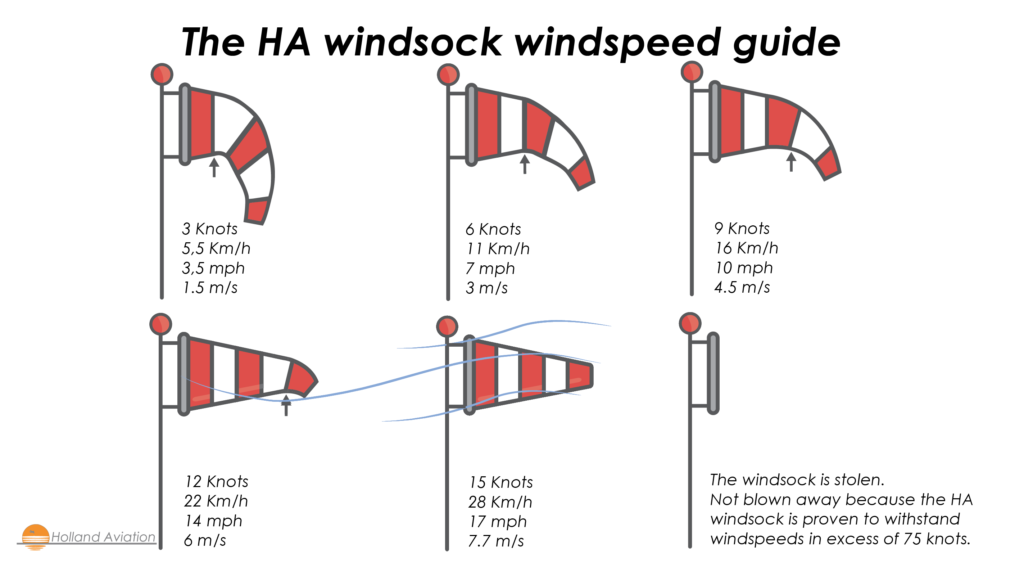
💨 Reading Wind Speed🧭
The windsock’s angle tells you how strong the wind is:
Hanging limp: calm or light breeze (<5 knots)
Half‑extended: moderate wind (~10–15 knots)
Fully horizontal: strong wind (>25 knots)
Many airport windsocks have five colored bands, each representing roughly 5 knots of wind speed. When all bands are stretched out, you’re looking at a stiff breeze.
🧠 Aerodynamics Behind It🧭
The windsock acts like a funnel. Air enters the wide opening, accelerates through the narrowing tube, and inflates the fabric. A metal ring keeps the mouth open, while a bearing swivel lets the entire assembly rotate freely as the wind shifts.
🛫 Why Pilots Rely on It🧭
Before every takeoff or landing, pilots glance at the windsock to:
Confirm runway choice matches wind direction
Estimate crosswind component
Validate ATIS or tower reports
It’s a timeless piece of visual communication — simple, reliable, and always “on.”
The image below shows how a windsock works.